Someone Filed an Unemployment Claim in Your Name
A stranger filing a fraudulent unemployment claim under your Social Security number is a specific, common fraud pattern with its own reporting path and its own tax-return trap.
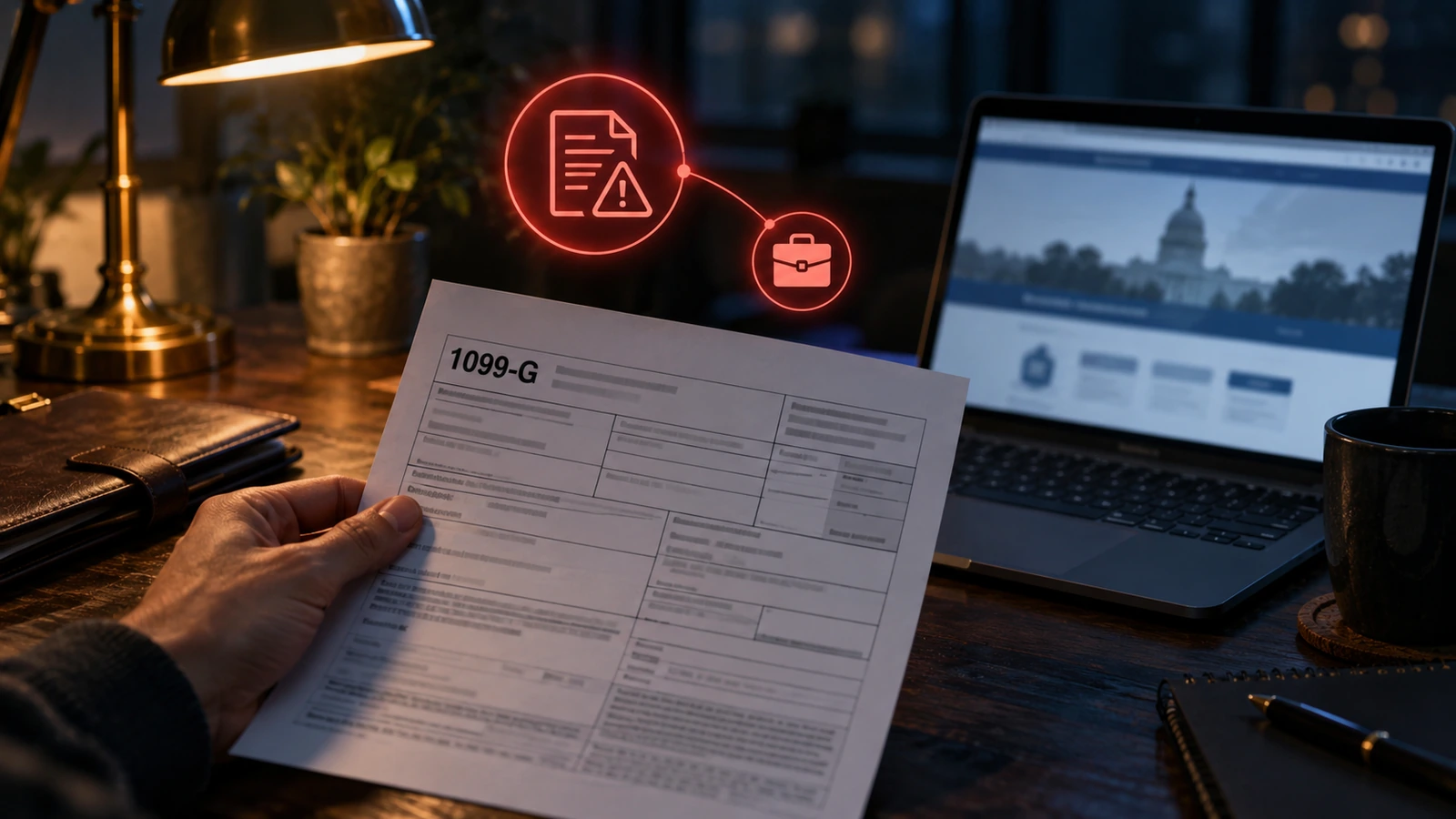
You get a 1099-G tax form for unemployment benefits you never received, or your employer tells you they got a claim notice for someone still actively employed — both are the classic first signals that a fraudster filed an unemployment insurance claim using your Social Security number, not you.
Report it to the specific state where the claim was filed
Unemployment insurance is administered at the state level, so the report has to go to the specific state agency where the fraudulent claim was actually filed — which is sometimes a state you don't even live in, if the fraudster used your identity to file remotely. The U.S. Department of Labor maintains a directory of verified state unemployment fraud reporting contacts specifically because there is no single federal portal that covers every state's claim system.
What some states require beyond the online report
Some state unemployment agencies require additional documentation beyond a basic online fraud report before they'll formally open an investigation — a police report or a signed sworn affidavit, in particular. Check your specific state's exact requirement rather than assuming a simple online form closes the matter; a state that expects a police report will not treat your case as resolved until you've filed one, even if you've already submitted the online fraud notice.
Do this in order
- Confirm which state the fraudulent claim was actually filed in (your employer's notice or your 1099-G will show this).
- Report the fraud directly to that state's unemployment agency using its specific verified fraud-reporting channel.
- Ask that state whether a police report or sworn affidavit is required to open a formal investigation, and file one if so.
- Request a corrected 1099-G from the state once the fraud claim is confirmed.
- Separately check your credit report and consider a fraud alert or credit freeze, since unemployment fraud often accompanies broader identity theft.
The tax-return trap: don't report income you never got
If a fraudulent claim generated a 1099-G in your name, do not report that unemployment income on your federal tax return — it isn't your income, and reporting it as though it were creates its own tax headache on top of the fraud itself. Do not wait for a corrected 1099-G to arrive before filing your actual tax return; file based on your real income, and keep documentation of the fraud report in case the IRS later asks why your reported income doesn't match the original 1099-G on file.
Why this often means broader identity exposure, not just a one-time claim
A fraudster generally needs your name, Social Security number, and often your date of birth or address history to file a convincing unemployment claim — which means the same stolen data set used for the unemployment claim may also be usable for other fraud (new-account fraud, tax-refund fraud, synthetic identity schemes). Treat a confirmed unemployment fraud incident as a signal to check your credit report and consider a fraud alert or credit freeze, not as an isolated, self-contained event.
If your employer, not you, discovers the fraud first
Employers are often the first to notice unemployment fraud, since a state agency typically contacts the employer to verify a claim before paying benefits — an employer receiving a claim notice for a currently employed, actively working staff member is itself strong fraud evidence. If your employer tells you this happened, don't assume they've handled the reporting on your behalf; confirm directly with the state agency that a fraud report has been filed under your name specifically, since the employer's notification to the state doesn't always constitute a fraud report about your personal identity.
Why states verify claims through employers in the first place
State unemployment systems typically send a claim-verification request to the listed employer specifically to catch exactly this kind of fraud before benefits are paid out — an employer confirming that the named employee is still actively working is one of the main checks standing between a fraudulent claim and an actual payout. This is also why many fraud victims first learn about the claim from their employer's HR department rather than from the state agency directly.
What identity thieves actually do with unemployment fraud
Unemployment fraud rings frequently operate at scale, filing claims across many stolen identities and multiple states using the same batch of compromised personal data, often sourced from a prior large data breach rather than a targeted attack on any one individual. If you're a victim, it's worth checking whether your information appeared in any known data breach around the time frame the fraudulent claim was filed, since that can help you understand how your data was likely obtained and whether other accounts tied to the same exposed data need attention.
Keeping records as the case moves through the state process
State agencies can take weeks to months to fully resolve an unemployment fraud investigation, and the paperwork trail matters if a dispute arises later — with the IRS, with a lender checking income history, or with the state itself if the case needs to be reopened. Keep a copy of your fraud report confirmation, any police report or affidavit filed, and all correspondence with the state agency in one place, the same way you'd document any other identity-theft recovery case.
Questions specific to Someone Filed an Unemployment Claim in Your Name
Will I owe taxes on unemployment benefits I never actually received?
No — you should not report fraudulent 1099-G income as your own on your tax return. File your actual return based on your real income, and keep your fraud report documentation on hand in case a discrepancy needs to be explained to the IRS later.
What if I don't know which state the fraudulent claim was filed in?
The 1099-G form itself will show which state issued it, or your employer's claim-verification notice will identify the state. If you genuinely can't determine the state, start with your own state of residence's unemployment fraud unit, which can often help trace or redirect the report.
Does reporting unemployment fraud protect me from other kinds of identity theft too?
Not automatically — reporting the fraudulent claim addresses that specific claim, but the same stolen personal information could be used elsewhere. Separately check your credit report and consider a fraud alert or credit freeze as its own, additional step.
How long does a state unemployment fraud investigation usually take?
This varies significantly by state and by how backlogged that state's fraud unit is; some states process fraud reports and issue a corrected 1099-G within weeks, others take considerably longer. Follow up directly with the specific state agency rather than assuming a standard timeline applies everywhere.